




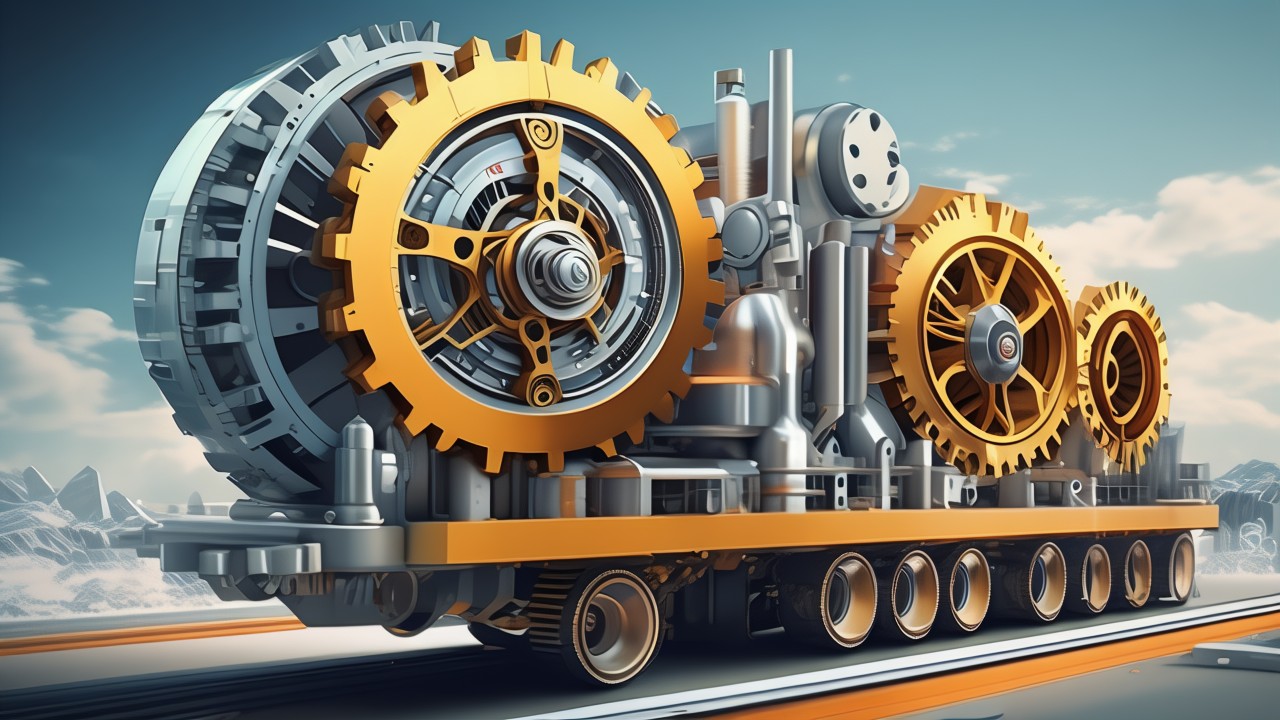
Advanced gear systems play a critical role in the performance, efficiency, and reliability of heavy machinery across industries such as construction, mining, agriculture, marine, and transportation. These systems are engineered to handle extreme loads, high torque, variable speeds, and harsh operating environments. Below are key real-world applications of advanced gear systems in heavy machinery:
1. Construction Equipment (Excavators, Bulldozers, Cranes)
- Application: Excavators use planetary gearboxes in their swing mechanisms and undercarriage tracks.
- Advanced Features:
- Planetary Gears: Provide high torque density and compact design for rotating booms and buckets.
- Hydrostatic Transmission with Gear Pumps: Enable smooth, infinitely variable speed control during digging and lifting.
- Real-World Impact: Improved fuel efficiency, reduced wear, and enhanced operator control—critical for precision work on job sites.
2. Mining Machinery (Load-Haul-Dump Trucks, Drills, Crushers)
- Application: Large haul trucks (e.g., Caterpillar 797F) rely on advanced multi-stage gearboxes for power transmission from diesel engines to massive wheels.
- Advanced Features:
- Hypoid and Spiral Bevel Gears: Handle high torque and angular misalignment between drivetrain components.
- Oil-cooled, sealed gearboxes: Operate reliably in dusty, abrasive environments.
- Real-World Impact: Increased uptime, reduced maintenance costs, and higher payload capacity—essential in large-scale mining operations.
3. Agricultural Machinery (Tractors, Harvesters)
- Application: Modern tractors use continuously variable transmissions (CVTs) and advanced gearboxes for field operations.
- Advanced Features:
- Torque Converters + Planetary Gears: Deliver seamless power delivery across varying terrain and load conditions.
- Electronic Control Systems: Adjust gear ratios in real time based on soil resistance and crop type.
- Real-World Impact: Greater fuel economy, improved traction, and reduced operator fatigue—enhancing productivity during long harvesting seasons.
4. Marine Vessels (Tugboats, Offshore Supply Ships, Cranes)
- Application: Marine propulsion systems use advanced gearboxes to transmit engine power to propellers or thrusters.
- Advanced Features:
- Reverse-Drive Gearboxes: Allow precise maneuvering in confined spaces.
- High-Precision Helical Gears with Anti-Wear Coatings: Resist corrosion and withstand shock loads from waves.
- Integrated Monitoring Systems: Use sensors to detect temperature, vibration, and oil condition in real time.
- Real-World Impact: Enhanced safety, better fuel efficiency, and longer service life—vital for vessels operating in remote or harsh oceanic conditions.
5. Wind Turbines (Offshore & Onshore)
- Application: Gearboxes convert low-speed rotor rotation into high-speed output for generators.
- Advanced Features:
- Multi-Stage Planetary Gear Trains: Achieve high reduction ratios (e.g., 100:1) with minimal space.
- Lubrication & Cooling Systems: Prevent overheating during prolonged operation.
- Condition Monitoring & Predictive Maintenance: Sensors detect early signs of gear tooth wear or bearing failure.
- Real-World Impact: Reduced downtime and increased energy output—key to making wind energy cost-effective and reliable.
6. Heavy-Duty Trucks and Buses (Dump Trucks, Transit Buses)
- Application: Gearboxes in commercial vehicles manage high torque and frequent stops/start cycles.
- Advanced Features:
- Synchronized Manual & Automated Transmissions: Improve shift quality and reduce driver workload.
- Lightweight, High-Strength Alloys (e.g., Case Hardened Steel): Increase durability while reducing overall weight.
- Real-World Impact: Lower emissions, better acceleration, and extended component lifespan—important for urban transit and freight logistics.
Key Technological Advancements Enabling These Applications:
- Material Science: Use of case-hardened alloys, titanium composites, and ceramic coatings to resist wear and heat.
- Precision Manufacturing: CNC machining and 3D printing ensure micron-level accuracy in gear teeth.
- Smart Monitoring: IoT-enabled sensors provide real-time diagnostics and predictive maintenance alerts.
- Lubrication Innovations: Synthetic oils and self-lubricating materials extend gear life in extreme conditions.
Conclusion
Advanced gear systems are not just mechanical components—they are intelligent, integrated parts of larger machine ecosystems. Their real-world impact includes:
- Higher operational efficiency
- Lower lifecycle costs
- Improved safety and reliability
- Environmental sustainability through reduced fuel consumption
As industries push toward automation, electrification, and smarter machinery, the evolution of gear systems will continue to be a cornerstone of innovation in heavy equipment engineering.