



How Modern CNC Machining Is Revolutionizing Precision Manufacturing
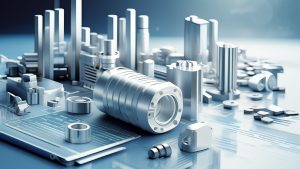
Computer Numerical Control (CNC) machining has emerged as a cornerstone of modern manufacturing, transforming the way industries produce high-precision components across aerospace, automotive, medical, electronics, and defense sectors. With advancements in software, hardware, and automation, today’s CNC systems are not just improving accuracy and efficiency—they are redefining what’s possible in precision manufacturing.
1. Unmatched Precision and Repeatability
Modern CNC machines operate with micron-level accuracy—often within ±0.005 mm or better. This level of precision ensures that every part produced is identical, reducing variability and eliminating human error. Advanced feedback systems like encoders and laser interferometers continuously monitor tool position, enabling real-time adjustments for consistent quality across thousands of units.
Example: In the medical industry, CNC-machined implants must fit perfectly within the human body. Even minor deviations can lead to complications—CNC ensures each implant meets exact specifications.
2. Increased Efficiency and Reduced Downtime
CNC machines now integrate with Industry 4.0 technologies such as IoT sensors, predictive maintenance algorithms, and cloud-based monitoring. These tools allow manufacturers to detect potential issues before they cause breakdowns, significantly reducing unplanned downtime.
Moreover, automated tool changers, pallet shuttles, and multi-axis capabilities enable continuous operation around the clock, maximizing machine utilization and throughput.
3. Complex Geometries Made Simple
Traditional machining struggles with intricate designs, but modern multi-axis CNC systems (up to 5-axis) can machine complex shapes in a single setup. This eliminates the need for multiple setups and repositioning, which were previously time-consuming and prone to alignment errors.
Application: Aircraft turbine blades require complex curves and internal cooling channels—only feasible with high-end 5-axis CNC machining.
4. Material Versatility and Innovation
Today’s CNC machines handle an extensive range of materials—from aluminum and steel to titanium, composites, and even exotic alloys. Advances in cutting tool materials (like carbide and ceramic inserts) and coolant delivery systems have enhanced performance on hard-to-machine materials without compromising surface finish or tool life.
This versatility supports innovation in lightweight design and high-performance applications, especially in electric vehicles and space exploration.
5. Integration with CAD/CAM and Digital Twins
The synergy between Computer-Aided Design (CAD), Computer-Aided Manufacturing (CAM), and digital twin technology allows engineers to simulate the entire machining process virtually. This enables:
- Optimization of toolpaths
- Collision detection
- Realistic performance prediction
- Faster prototyping
Manufacturers can validate designs before any physical material is cut, reducing waste and development time.
6. Sustainability and Waste Reduction
CNC machining promotes lean manufacturing by minimizing material waste through precise cutting and optimized nesting. Scrap metal can be recycled efficiently, and energy consumption is reduced thanks to smarter controls and variable-speed spindles.
Additionally, fewer defective parts mean less rework and lower environmental impact.
7. Scalability and Customization at Scale
From prototyping to mass production, CNC machining scales seamlessly. Small-batch custom parts—such as bespoke prosthetics or specialized industrial tools—can be produced economically without sacrificing quality. This supports the rise of on-demand manufacturing and agile supply chains.
The Future: AI, Robotics, and Autonomous CNC Systems
Emerging trends like artificial intelligence (AI) and collaborative robotics (cobots) are pushing CNC machining into new frontiers:
- AI-driven optimization of cutting parameters based on real-time data
- Self-learning machines that adapt to wear and material variations
- Fully autonomous CNC cells integrated with robotic arms for loading, inspection, and sorting
These innovations promise even greater speed, consistency, and cost-efficiency.
Conclusion
Modern CNC machining is far more than just automated milling or turning—it is a smart, adaptive, and intelligent manufacturing ecosystem. By combining precision engineering with digital innovation, CNC technology is revolutionizing how products are designed, prototyped, and manufactured. As industries demand faster turnaround times, higher quality, and greater customization, CNC machining stands at the forefront of the next industrial revolution—making it indispensable in the era of smart manufacturing.